
Foot and heel questions, answered
Plantar fasciitis: why heel pain hangs on, and what helps
 By Dr. Jill Althoff, DC, founder of Althoff Wellness Clinic in Cheyenne, Wyoming. In practice since 2003 and author of two books on neuropathy.
Short answer
Plantar fasciitis is irritation of the plantar fascia, the band of connective tissue on the bottom of your foot that helps hold up your arch. It usually hurts most with the first steps in the morning or after sitting. It often hangs on for months because the root cause, very often a tight calf, isn't addressed, or because daily habits keep irritating it.
What it feels like
Patients describe it as stepping on shards of glass. It's usually worst:
- With the first steps out of bed in the morning
- When standing up after sitting for 30 minutes or more
- After a lot of walking or time on your feet
That's what makes it so frustrating. Do too much and it hurts. Sit around and it hurts.
What most people have already tried
By the time people come to us, they've usually tried new shoes, soft shoes, inserts, orthotics, massage, and sometimes physical therapy. Some of those help for a while. When the pain keeps coming back, something is being missed.
Why it hangs on
The fascia can get irritated for different reasons. Stepping on a Lego in the middle of the night can do it. More often, the fascia is under constant strain because the calf muscles are tight.
Here's something I see all the time: most people are stretching the wrong muscles. Your calf is made of more than one muscle, and the stretches most people do, even ones they were given by another provider, often miss the one that's actually tight. If the right muscle isn't addressed, the strain on the fascia doesn't let up. Figuring out which muscles are tight is part of your evaluation.
Small habits matter too. Sleeping on your side with your toes pointed keeps the calf and fascia shortened all night. Wearing the wrong shoes for what you're doing that day can keep re-irritating it.
How SoftWave fits in
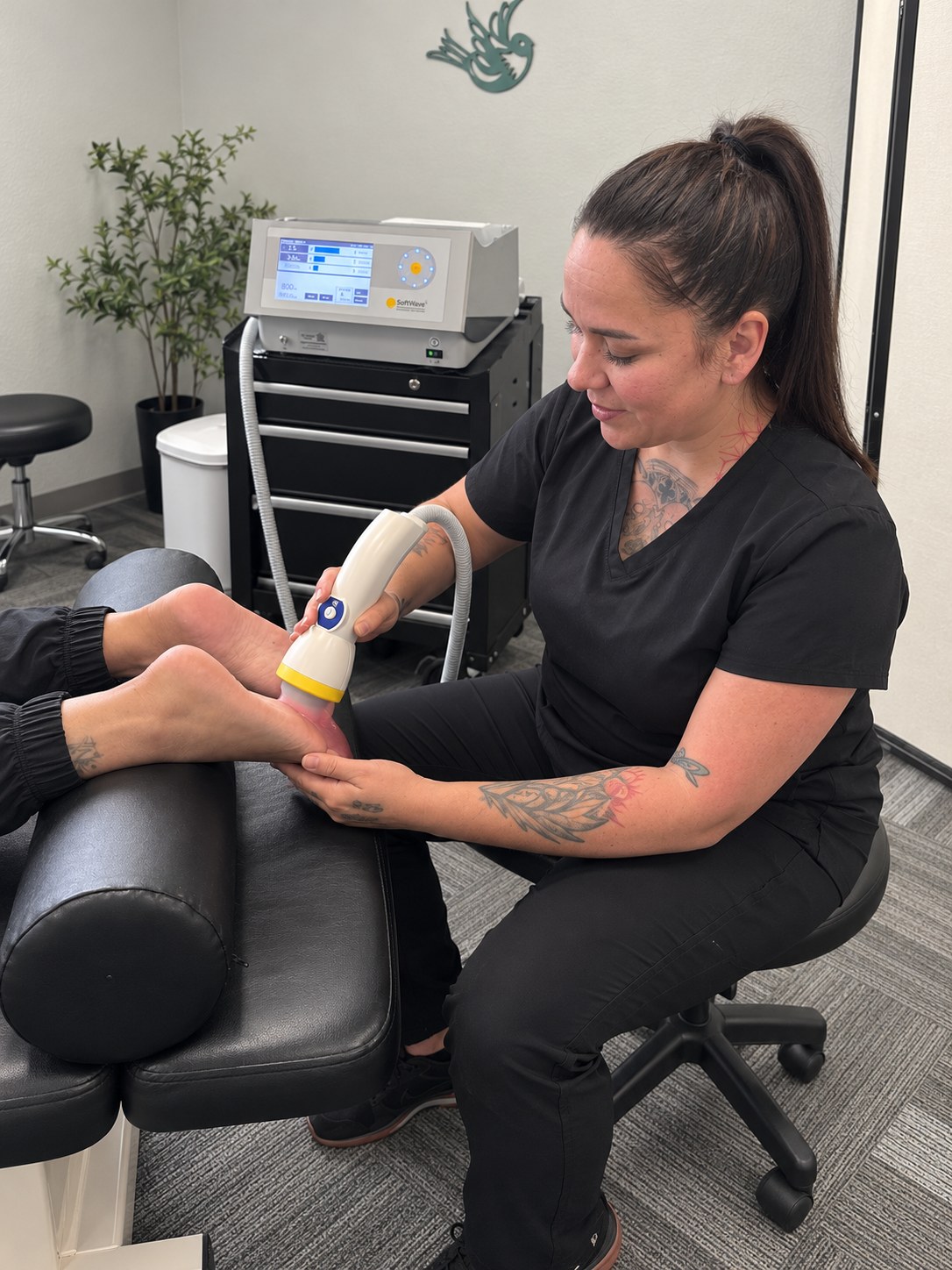
The plantar fascia doesn't have a great blood supply, which is one reason it can be slow to heal. We often use SoftWave, an FDA-cleared shockwave device. SoftWave is designed to support your body's own healing response, including increased blood flow to the treated area. It does not use needles or medication.
Sessions are short. How many you need depends on your foot, and results vary. Some patients notice a change early. We usually pair it with very specific stretches and footwear advice so the same strain doesn't keep coming back.
Who it may not help
Not every heel or foot pain is plantar fasciitis. Morton's neuroma, a pinched nerve between the toes, is one condition where we don't see good results with this approach, and we'll tell you so. Your evaluation tells us what's going on and whether we're the right fit.
Learn more about SoftWave therapy in Cheyenne.
More from Dr. A
This page is educational and is not a substitute for medical advice. Individual results vary.