
Neuropathy questions, answered
Can neuropathy get better?
 By Dr. Jill Althoff, DC, founder of Althoff Wellness Clinic in Cheyenne, Wyoming. In practice since 2003 and author of two books on neuropathy.
Short answer
For many people, yes. Nerves can recover and regrow when the conditions around them support healing. How much someone improves depends on what is causing the neuropathy, how much nerve function remains, other health conditions, and how consistently they follow their care plan. No one can promise a specific result, but "learn to live with it" is not the only answer.
What I tell patients when they ask
I use the example of a surgical scar. Right after surgery, the skin around the incision is numb. Months later, most people can feel that skin again. That happens because nerves can regrow and reconnect. They just need the right environment to do it.
With neuropathy, something in that environment is usually off. It might be blood sugar, inflammation, circulation, a medication, or nutrients the body is not absorbing. Our job is to find what is missing and address it.
Who tends to improve
In my experience, the people who see the most change are the ones who commit to their plan and actually follow it: the nutrition changes, the home care, and the clinic visits.
Progress is harder when processed foods and sugar stay in the diet, when blood sugar or metabolic problems go unaddressed, or when there is ongoing inflammation in the body. Some people also have serious underlying health conditions that make it harder for the body to heal the nerves at the same time. We talk about all of this honestly at the evaluation.
Blood sugar matters, even without diabetes
Many people assume blood sugar only matters if you have diabetes. It is not that simple. Big swings in blood sugar, and blood sugar that runs high without reaching a diabetes diagnosis, are both linked to nerve problems. What I see often: once the kids leave home, people start cooking for one or two, and quick, processed foods take over. Those meals send blood sugar up and down all day. Part of our work is helping you choose foods that keep blood sugar steady, so the nerves get a better environment to heal.
What improvement looks like in real life
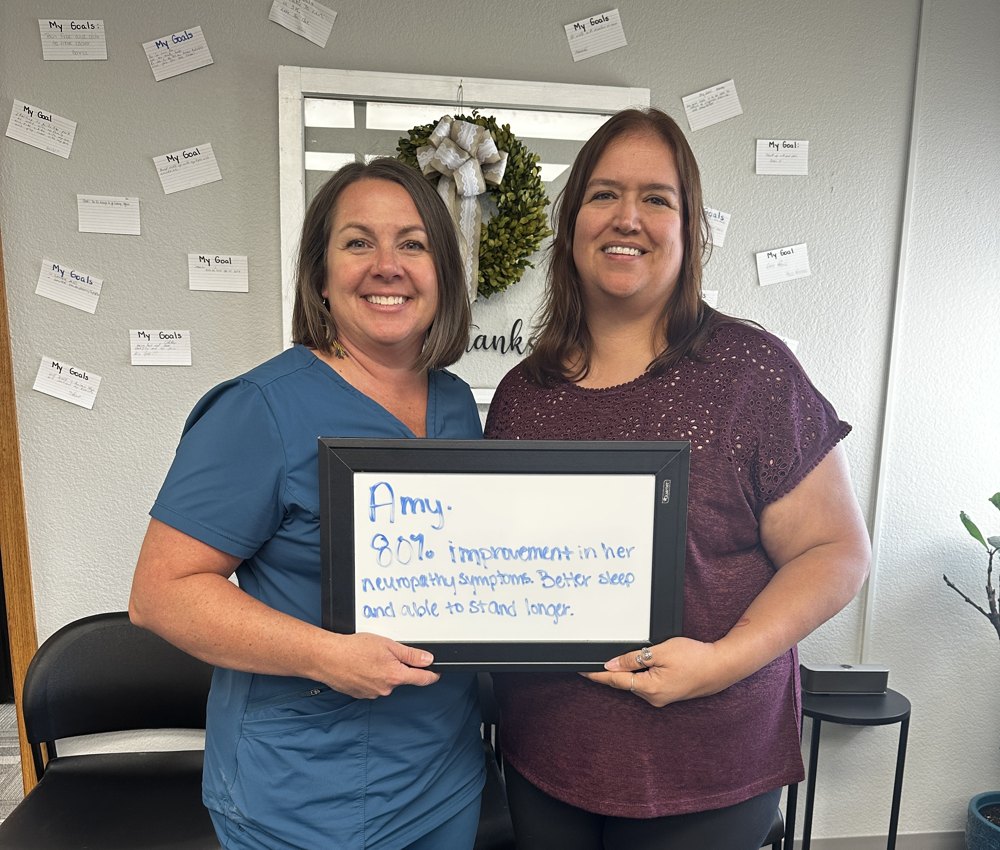
- Sleep. Often the first thing patients notice. Sleeping through the night, or even half the night, makes a huge difference in how people feel.
- Walking and standing. Walking farther and standing longer with less pain.
- Feeling the floor again. One of my favorite moments is when a patient says, "Oh my gosh, I can tell this is carpet under my feet," or tile, or wood. Being able to feel the difference again is a big deal.
- Balance. Usually one of the last things to change, because the nervous system has to start sensing the feet again before balance can improve.
"There's no cure, you'll have to live with it"
Many of my patients were told this before they came to us. Medications can help manage symptoms, and they have their place. Our approach is different: we look for the reasons the nerves are not healing and work on those. The body's ability to heal is remarkable when it has what it needs.
Don't stop or change any medication without talking to the doctor who prescribed it.
More from Dr. A on neuropathy
This page is educational and is not a substitute for medical advice. Individual results vary.