
Neuropathy questions, answered
What happens at a neuropathy evaluation?
 By Dr. Jill Althoff, DC, founder of Althoff Wellness Clinic in Cheyenne, Wyoming. In practice since 2003 and author of two books on neuropathy.
Short answer
A neuropathy evaluation at Althoff Wellness Clinic starts with a detailed health history, then an exam of circulation, skin color and oxygen levels in your feet, which types of nerve fibers are affected and how much, reflexes and muscle strength, orthopedic tests to rule out other causes, and your balance. We finish with an honest conversation about what care would involve and whether you're ready for it.
Before your visit: the paperwork matters
You'll receive in-depth paperwork before your first visit. It's long on purpose. Neuropathy is complex, and I don't want to miss a piece of the puzzle.
I'm looking at:
- Your medications. Some medications can contribute to neuropathy.
- Surgeries, illnesses, and timing. I want to know whether your symptoms started after a surgery, an illness, or a new medication. That includes COVID-19: how many times you have had it, whether you were vaccinated, and whether your symptoms began around that time. Some people tell me their symptoms started after a serious illness when their oxygen levels were low for a long stretch, and that history helps me understand what the nerves have been through.
- Other health conditions. Blood sugar problems, autoimmune and other inflammatory conditions, digestive issues, and joint problems can all affect how well nerves heal.
- Nutrition and gut health. Whether your body is absorbing what it needs from food and supplements.
- Lab work, when your history points that way.
The exam
- Circulation and blood flow to your feet and legs.
- Skin color and oxygen levels in your feet, and your hands if they're affected.
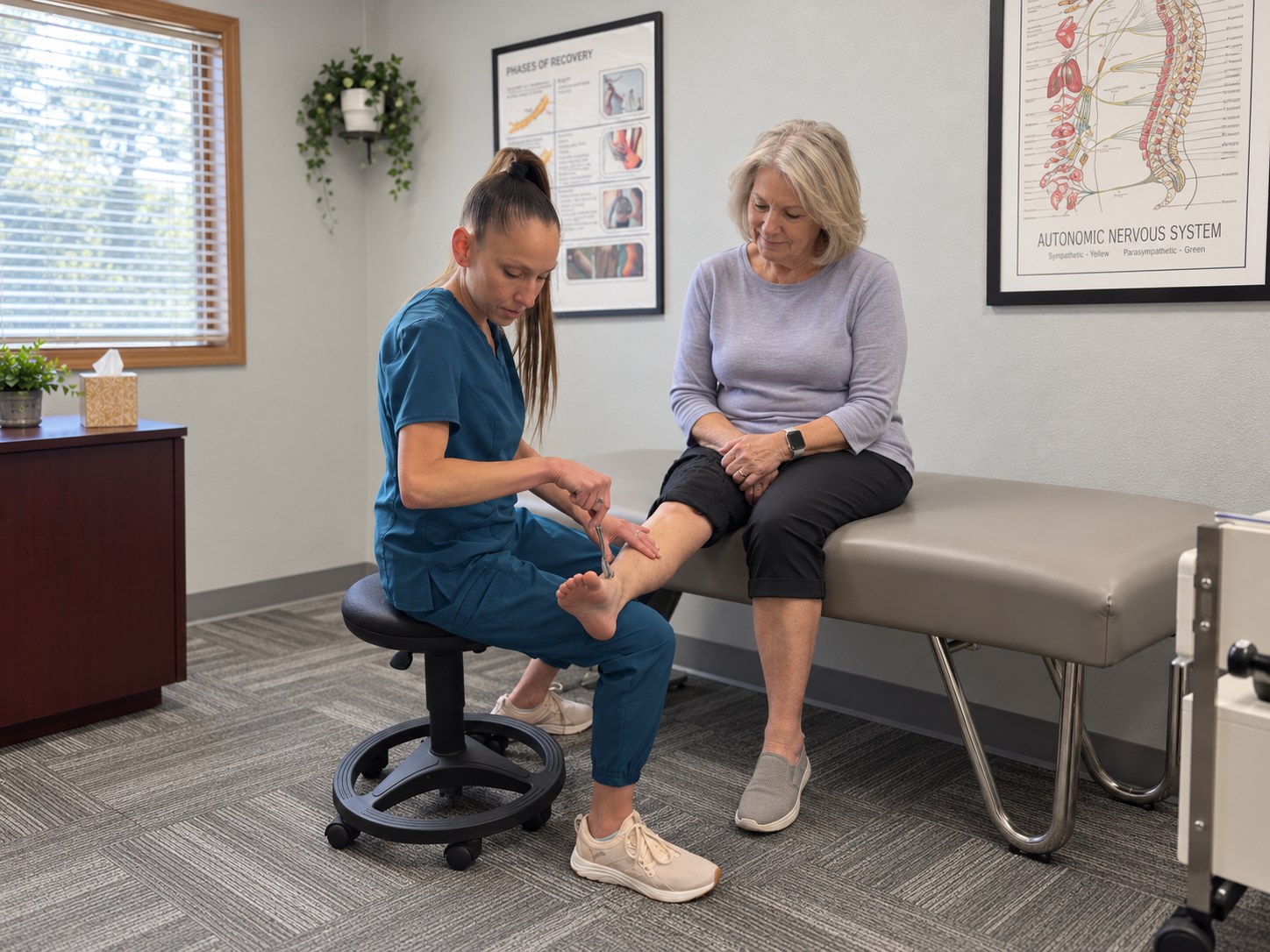
- Nerve fiber testing. Different sensory nerve fibers sense different things, such as light touch, vibration, temperature, and sharp versus dull. I want to know which ones are affected and how severely.
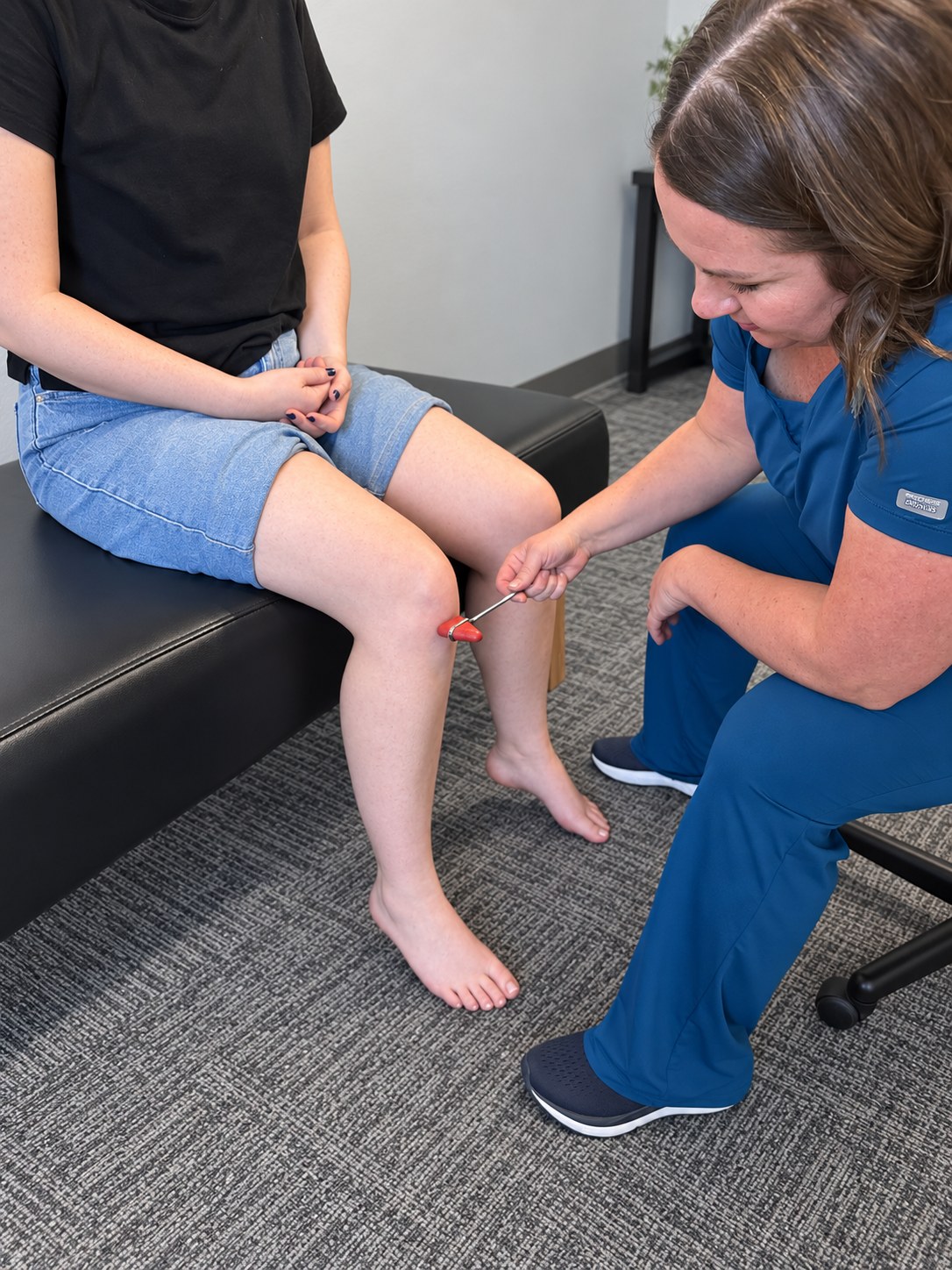
- Neurological testing. Reflexes, muscle strength, and whether you can fire each muscle group the way you should. This shows how well the nerves are sending signals.
- Orthopedic testing to rule out other problems, such as a back or joint issue, that can cause similar symptoms.
- Balance testing.
The commitment conversation
Care might include nutrition changes for a period of time, daily therapies at home, and regular clinic visits. Before we start, I'll ask whether you're ready to do those things. Results depend on follow-through, and I want you to succeed, not end up frustrated.
When we refer you elsewhere
Some conditions, such as multiple sclerosis and Parkinson's disease, are not a good fit for our care, and we'll point you toward the right provider. If something in your evaluation needs medical attention, we'll tell you.
How long it takes and what it costs
Your first visit takes about 30 minutes to 1 hour 15 minutes. The initial neuropathy evaluation is $47.
Many people start by watching our free neuropathy webinar first. It explains what causes neuropathy, how our care works, and how insurance applies, so you come in with your questions already answered.
More from Dr. A on neuropathy
This page is educational and is not a substitute for medical advice. Individual results vary.