
Neuropathy questions, answered
Neuropathy, balance problems, and falls
 By Dr. Jill Althoff, DC, founder of Althoff Wellness Clinic in Cheyenne, Wyoming. In practice since 2003 and author of two books on neuropathy.
Short answer
Your brain keeps you balanced using three main sources: your eyes, your inner ear, and the nerves in your feet. When neuropathy dulls the signals from your feet, your brain loses track of where you are in space, which makes falls more likely. Good shoes, the right walking aid, and treating the nerve problem all lower that risk.
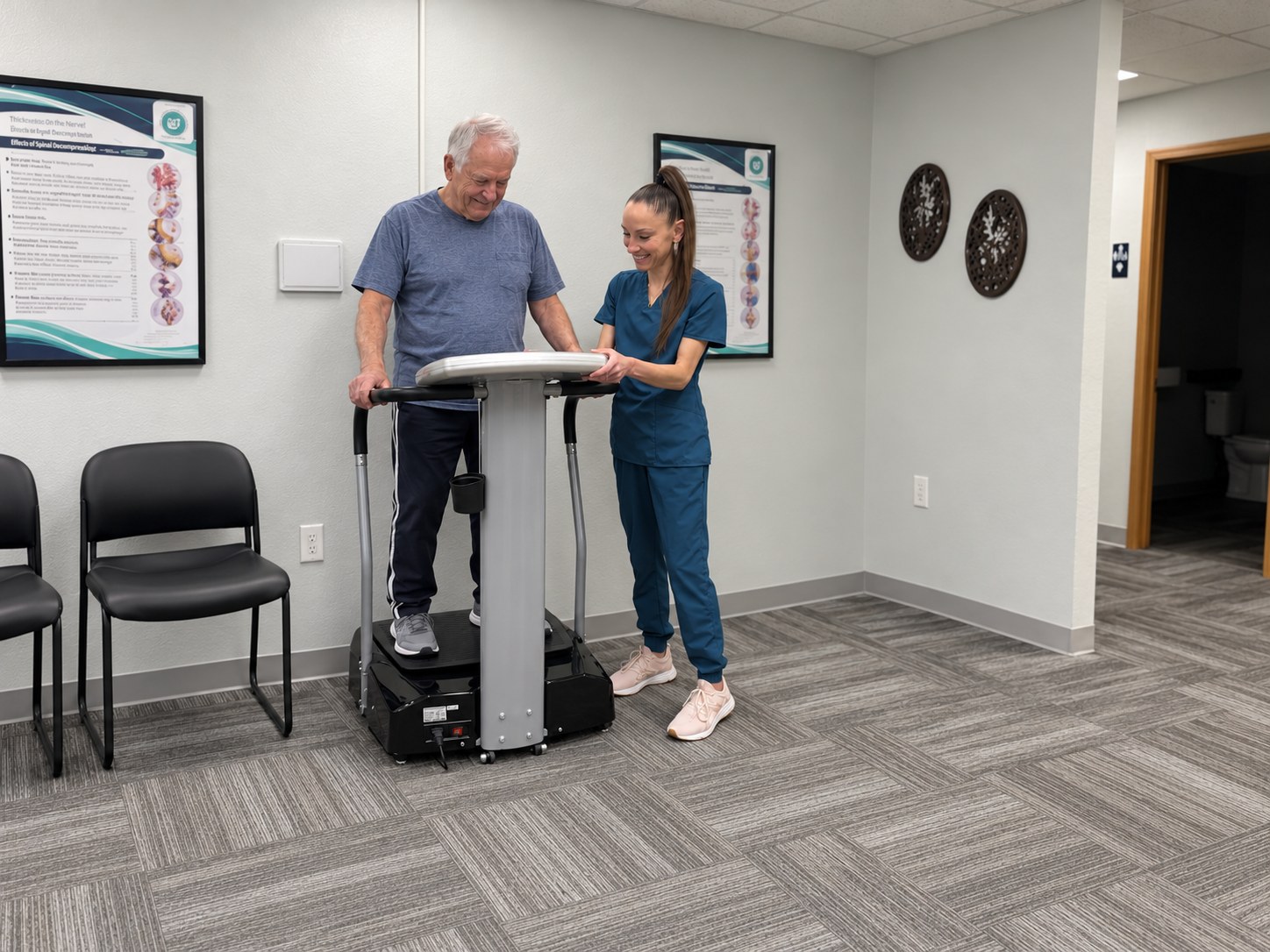
Why numb feet throw off your balance
When you stand up from a chair, pressure shifts onto your feet. Healthy nerves instantly tell your brain, "You're standing now." When those nerves aren't working well, that message is weak or missing, so your brain has to rely on your eyes and inner ear to fill in the gap.
Warning signs to watch for
- Touching walls and furniture as you walk. Your hands are doing the job your feet should be doing.
- Needing "just a minute" after standing up. You're waiting for your eyes and inner ear to catch up.
- Feeling unsteady while washing your hair in the shower. One of the most common signs I hear about. When you close your eyes to rinse, your brain loses its backup, and if your feet are not doing their job, you suddenly cannot tell where you are. The same thing happens in the dark.
Why falls are serious
Any balance problem is worth taking seriously, especially as we get older. A hip fracture is one of the most dangerous outcomes of a fall: research on older adults has found that about 1 in 5 people die within a year after a hip fracture. Preventing the fall matters.
What I recommend
- Wear shoes, even at home. People with numb feet often cannot feel injuries. I once had a patient who stepped on glass and did not know it was stuck in her foot until a large blister formed. That kind of wound can become infected without warning.
- Choose shoes for your kind of neuropathy. People ask me which shoe is best, and the honest answer is that it depends on your symptoms. If balance is your main problem, a very thick, soft sole can make it worse, because it puts even more cushion between your feet and the ground. Some of my patients love minimal "barefoot" shoes, but if your feet are extremely sensitive and painful, those may not have enough cushion. Some patients can barely stand anything touching their feet, and others are so numb they cannot feel anything at all, so the right shoe is different for each person. We talk through this at the evaluation.
- Use the right walking aid. A cane, walker, or wheelchair when needed is not giving up. It keeps you safe while we work on the cause.
- Check your feet every day for cuts, blisters, or color changes, and tell your medical provider about any wound that isn't healing.
Balance usually improves later in care than pain or sleep, because the nervous system has to start sensing the feet again first.
More from Dr. A on neuropathy
This page is educational and is not a substitute for medical advice. Individual results vary.