
Back and spine questions, answered
Neck pain: what's behind it and what actually helps
 By Dr. Jill Althoff, DC, founder of Althoff Wellness Clinic in Cheyenne, Wyoming. In practice since 2003 and author of two books on neuropathy.
Short answer
Neck pain usually comes from several things at once: forward head posture from phones and desks, old injuries like whiplash that never fully healed, stress and muscle tension, and disc or arthritis changes. It can cause headaches, trouble sleeping, and pain or tingling down the arm. Finding which of these is driving your pain is the first step, and that takes a hands-on exam, not just a prescription.
What neck pain does to your day
The patients I see with neck pain are worn out. Here's what they tell me:
- They can't sleep. Some, especially with a disc problem sending pain down the arm, end up sleeping in a recliner.
- They can't sit at their desk long enough to get their work done.
- Driving is hard because they can't turn to look left and right.
- They get tension headaches.
- They get a massage, and an hour later it feels like they were never there.
What's usually behind it
It's almost never just one thing.
- Posture. Phones, laptops and long hours at a desk pull the head forward. Some people call it "tech neck."
- Old injuries. A football hit as a teenager or a car accident ten years ago can strain the neck and change its normal curve. Sometimes it shows up years later.
- Stress. Tension tends to settle in the neck and shoulders.
- Discs, arthritis and degenerative changes. These can irritate nerves and send pain, numbness or tingling into the arms and hands.
The bowling ball problem
Your head weighs about as much as a bowling ball, roughly 10 to 12 pounds. Hold a bowling ball close to your chest and you can carry it for a while. Hold it out six inches in front of you and it feels much heavier, even though the weight hasn't changed. Your neck works the same way. When your head sits forward of your shoulders all day, your neck muscles work much harder to hold it up.
When to get emergency care
Go to the emergency room or call 911 if neck pain comes with:
- A serious injury, like a car accident or a fall
- A sudden, severe headache, or a headache with repeated vomiting
- Fever with a stiff neck
- New weakness in an arm or leg, trouble walking, or loss of balance
- Sudden dizziness, slurred speech, vision changes, or drooping on one side of the face. These can be signs of a stroke.
What happens at your first visit
Medications and injections can calm pain and inflammation, and they have their place. But they don't change how your neck moves or the habits that keep irritating it. Our goal is to find out what's driving the pain.
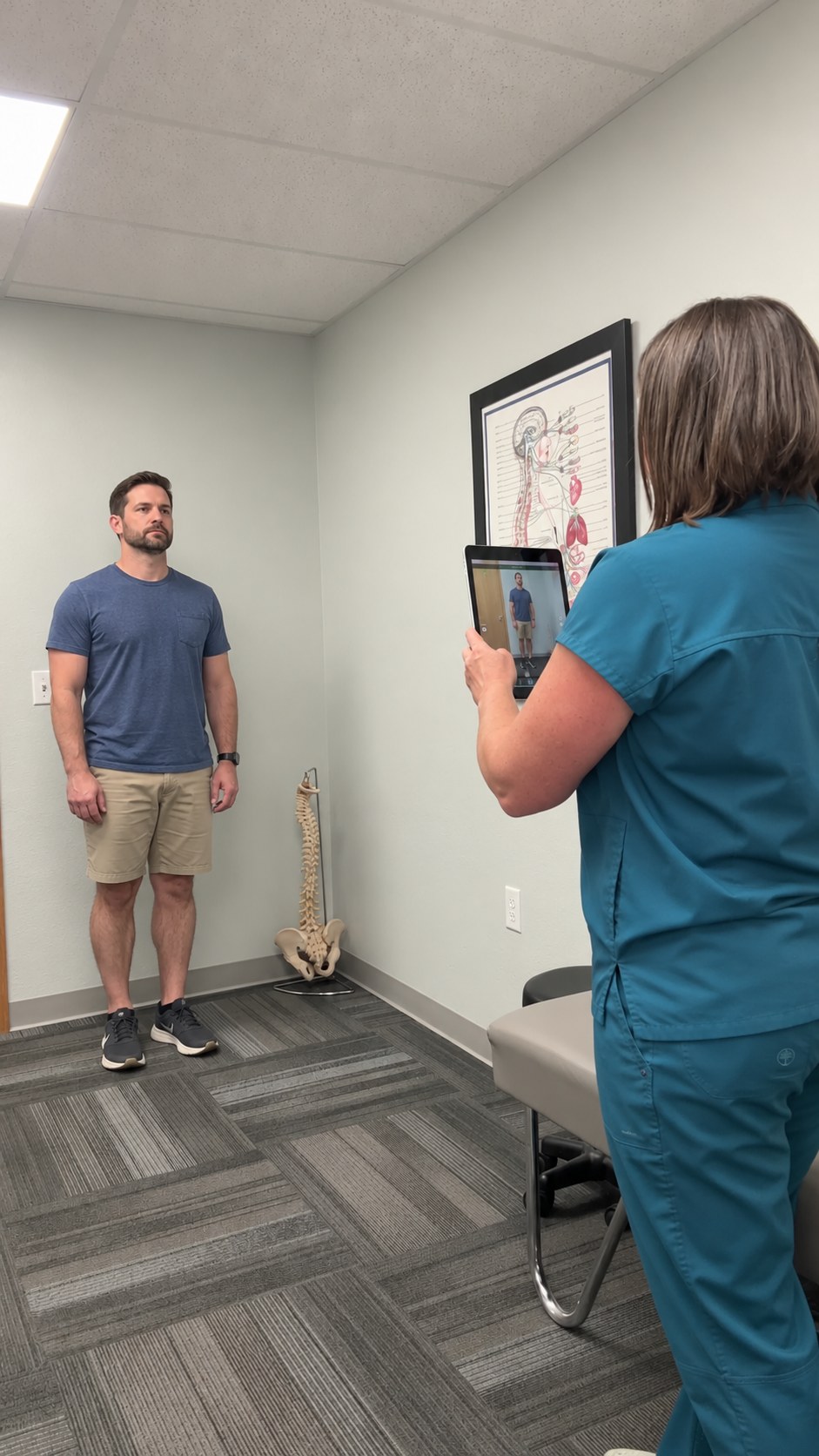
At your first visit, we talk about how your neck is affecting your sleep, your work and your day. Then we look closely:
- Whether there's tingling, numbness or pain going down your arms
- Where your headaches are, and what sets them off
- Your posture, from the front and the side
- How your neck moves forward, backward, side to side, and turning
- Orthopedic and neurological tests and reflexes, when needed
- The muscles in your neck, including the ones in the front
Those front-of-the-neck muscles are often overlooked. Many people are nervous about working on them, but they're frequently part of the problem.
I've been there
I injured a disc in my neck in a car accident when I was 17, and it has flared up a few times since. I know what burning and tingling down your arm feels like. I know what it's like to lose sleep to pain so bad you can't think about anything else. Over the years I've learned what I need to do to take care of my own neck, and I teach those same things to my patients. Results vary from person to person.
Learn more about our back, neck and spine care, or read about disc problems and spinal decompression.
More from Dr. A
This page is educational and is not a substitute for medical advice. Individual results vary.