
Back and spine questions, answered
Sciatica: what causes it and when to get help fast
 By Dr. Jill Althoff, DC, founder of Althoff Wellness Clinic in Cheyenne, Wyoming. In practice since 2003 and author of two books on neuropathy.
Short answer
Sciatica is pain, numbness, tingling, burning, or weakness that starts in the low back or buttock and travels down the leg along the sciatic nerve. Common causes include a disc problem in the low back, a tight piriformis muscle pressing on the nerve, and alignment or movement problems in the pelvis and spine, often several at once. Numbness in the "saddle" area or new loss of bladder or bowel control is a medical emergency.
What sciatica feels like
Patients describe it in a lot of ways:
- Pain that starts in the low back or buttock and travels down the leg
- Numbness, tingling, or burning in the leg or foot
- A leg that feels heavy, "dead," or weak
- Not being able to sit, stand, or walk for long, or do anything for any length of time
Nerve pain is hard to explain to someone who hasn't had it. It can be numb and painful at the same time. I understand it personally: I injured a disc in my neck in a car accident years ago, and it has flared up a few times since.
What's usually behind it
Sciatica is a symptom, not a diagnosis. The question is what is irritating the nerve. In my experience it's often one or more of these:
- A disc problem in the low back, such as a bulge or herniation.
- The piriformis muscle. When this deep buttock muscle gets tight, it can irritate or pinch the sciatic nerve.
- Alignment and movement problems in the pelvis and low back.
- A nerve that isn't gliding freely, which sometimes responds to gentle nerve-mobility exercises.
The low back is often doing someone else's job
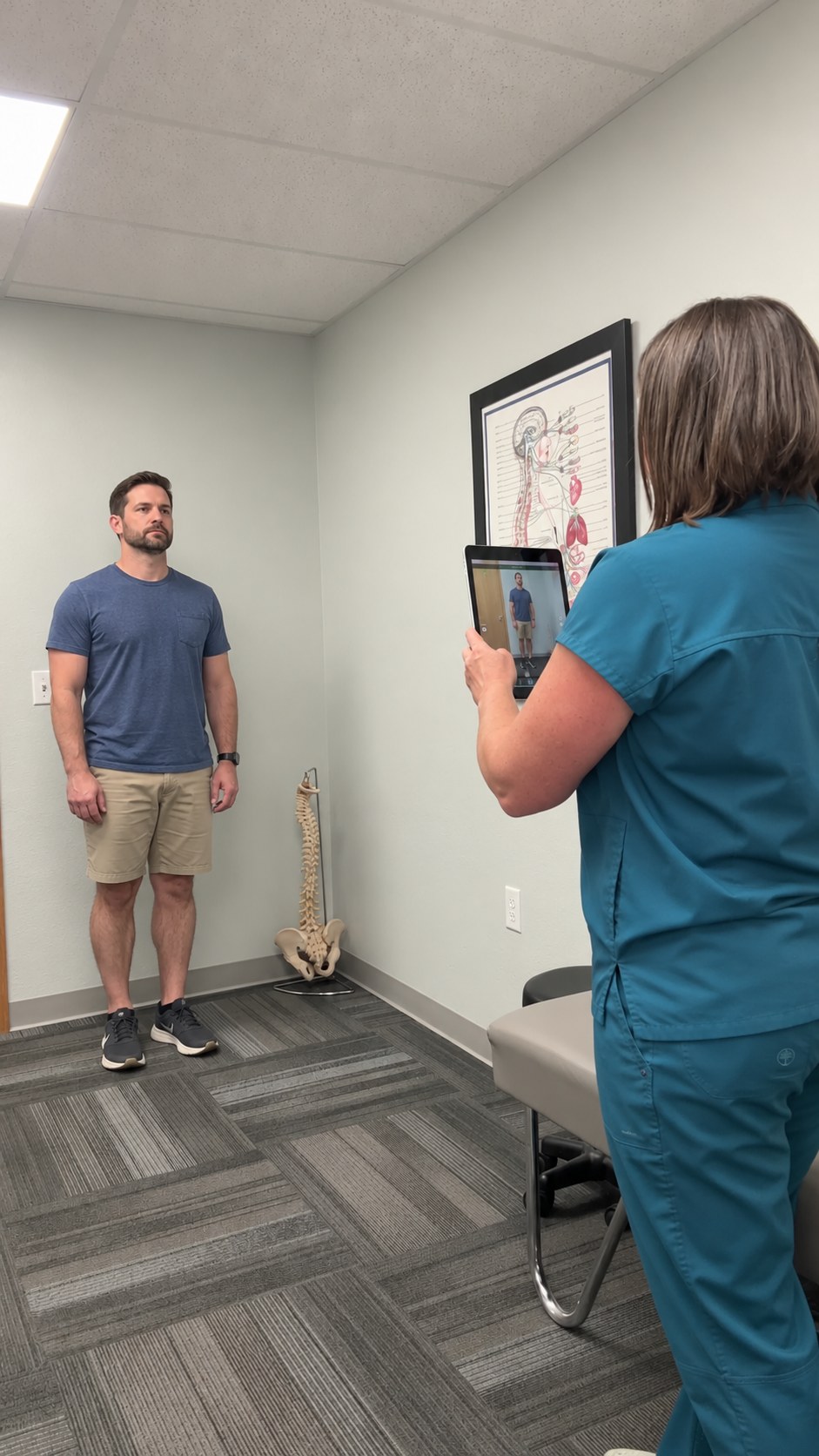
Here's something I see all the time. A patient comes in for low back pain. We do a digital posture exam, a functional movement assessment, and range-of-motion testing. Their low back actually moves fairly well, but their mid and upper back barely move at all. The low back has been overworking to make up for it. Finding that changes the plan.
When to get medical help right away
Go to the emergency room or call 911 if sciatica comes with:
- Numbness in the "saddle" area, where you'd sit on a saddle (inner thighs, groin, buttocks)
- New loss of bladder or bowel control, or not being able to urinate
- Rapidly worsening weakness in the leg or foot
These can be signs of cauda equina syndrome, a serious compression of the nerves at the bottom of the spine that needs urgent care. Any new change in bladder or bowel habits alongside back pain is worth checking with your medical provider promptly.
How sciatica is usually treated, and our approach
Common medical treatment includes muscle relaxers, pain medications, anti-inflammatories, and sometimes cortisone or epidural steroid injections. Those can have a place, especially when pain is so severe that it's hard to do anything else. My goal is to find what's irritating the nerve and work on the cause, so that surgery stays a last resort rather than the first answer. Don't stop or change any medication without talking to the doctor who prescribed it.
Learn more about disc problems and spinal decompression or our back, neck and spine care.
More from Dr. A
This page is educational and is not a substitute for medical advice. Individual results vary.